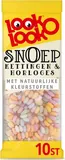
E160Carotenoids (type not printed)
E160 stands for carotenoids, the yellow, orange and red pigments found in carrots, tomatoes and peppers. It is used when a label says “carotenoids” without naming the type (E160a–E160f).
- Code
- E160 · INS 160
In Vietnam✓ PermittedOn the list of permitted additives — Circular 24/2019, Appendix 1
Risk level on the Yenzo Scalevery lowBased on the Open Food Facts additives taxonomy How E160 appears on labels
IngredientsIllustrative example
Wheat flour, vegetable oil, salt, sugar, colour (160), dried onion and garlic, pepper, natural colour (160a).
colour (160)colour 160E160INS 160
Questions about carotenoids
What is E160 (carotenoids)?
E160 is the common code for the carotenoid group, yellow, orange and red pigments. A label uses this code when it does not name the type; each specific type has its own code: E160a (carotenes), E160b (annatto), E160c (paprika extract), E160d (lycopene), E160e (beta-apo-8'-carotenal) and E160f (ethyl ester of beta-apo-8'-carotenoic acid).
Is E160 permitted in Vietnam?
Circular 24/2019/TT-BYT has no row for INS 160 as such. Its Appendix 1, the list of additives permitted in food, lists specific carotenoids, for example beta-carotene (160a(i)), annatto (160b(i)) and lycopene (160d(i)); see the page of each code.
Other colours
Found in these products
Information only, not medical advice. The risk level is the additive's class in Yenzo's open scoring method, based on the cited source.
 Yenzo