 Yenzo
What is E160a (carotenes)?
It is carotenes, a group of yellow-orange pigments, mainly beta-carotene. Circular 24/2019/TT-BYT classes it as a colour.
E160a is carotenes, mainly beta-carotene: the yellow-orange pigment found naturally in carrots and pumpkin. In food it adds or restores a yellow-orange colour.
Did you know? According to EFSA, the beta-carotene used as an additive is either synthetic or obtained by fermentation of the fungus Blakeslea trispora; mixed carotenes consist of plant carotenes and algal carotenes.
Wheat flour, vegetable oil, salt, sugar, colour (160a), dried onion and garlic, pepper.
Sources: Codex CXG 36-1989, Class Names and the International Numbering System (INS)
It is carotenes, a group of yellow-orange pigments, mainly beta-carotene. Circular 24/2019/TT-BYT classes it as a colour.
In 2012 EFSA concluded that the data were not sufficient to set an ADI for mixed carotenes and beta-carotene. EFSA found that using synthetic beta-carotene and mixed carotenes from palm fruit oil, carrots and algae as a colour is not of safety concern, provided the intake from the additive and from food supplements is not more than the amount likely to be ingested from the regular consumption of the foods in which they occur naturally (5–10 mg a day). EFSA could not conclude on the safety in use of mixed carotenes.
Yes. The beta-carotene forms 160a(i), 160a(ii) and 160a(iii) are listed in Appendix 1 of Circular 24/2019/TT-BYT, the list of additives permitted in food, with the function colour. The algal form (160a(iv)) is not in Appendix 1.
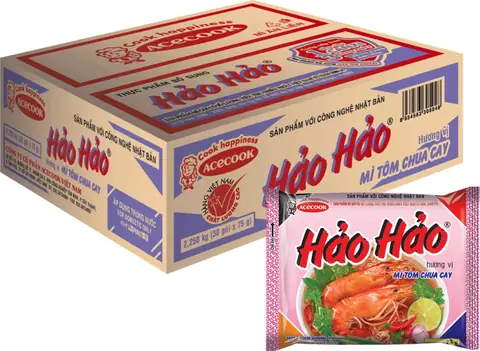 Mì Hảo Hảo tôm chua cay (hot & sour shrimp instant noodles)Acecook · instant noodles
 Kẹo marshmallow Markenburg Mallow Bombs nhân xoài (mango explosion)Markenburg · sweets and candy
 Sốt mayonnaise SimplySimply · sauces and dipsMì ramen HO-YA vị gà (golden chicken ramen)HO-YA · instant noodlesBánh quy giòn Kinh Đô Crunchy (crackers)Kinh Đô · snacks
Updated 21 October 2026
Photograph the label — Yenzo tells you right away and rates the product.
Thank you! We have received it and will reply by e-mail if needed.