 Yenzo
What is E401 (sodium alginate)?
Appendix 1 of Circular 24/2019/TT-BYT lists the functions of sodium alginate as bulking agent, carrier, emulsifier, foaming agent, gelling agent, glazing agent, humectant, sequestrant, stabilizer and thickener.
E401 is sodium alginate, the sodium salt of alginic acid (E400). In food it thickens, forms gels and helps keep products stable.
Did you know? Annex II of Regulation (EC) No 1333/2008 permits sodium alginate (E 401) in dietary foods for infants and young children for special medical purposes (categories 13.1.5.1 and 13.1.5.2) on this condition: “From four months onwards in special food products with adapted composition, required for metabolic disorders and for general tube-feeding”.
Wheat flour, vegetable oil, salt, sugar, thickener (401), dried onion and garlic, pepper, natural colour (160a).
Appendix 1 of Circular 24/2019/TT-BYT lists the functions of sodium alginate as bulking agent, carrier, emulsifier, foaming agent, gelling agent, glazing agent, humectant, sequestrant, stabilizer and thickener.
In 2017 EFSA concluded that there is no need for a numerical ADI for alginic acid and its salts (E 400–E 404), and that there is no safety concern at the level of the refined exposure assessment for the reported uses.
Yes. Sodium alginate (INS 401) is listed in Appendix 1 of Circular 24/2019/TT-BYT, the list of additives permitted in food.
EFSA concluded that infants' and young children's exposure to alginic acid and its salts (E 400–E 404) from these additives should stay below therapeutic dosages, at which side-effects could occur. For dietary foods for special medical purposes and special formulae for infants (category 13.1.5.1), and for dietary foods for babies and young children for special medical purposes (category 13.1.5.2), EFSA concluded that the available data did not allow an adequate safety assessment. If you have a particular health condition, ask a doctor.
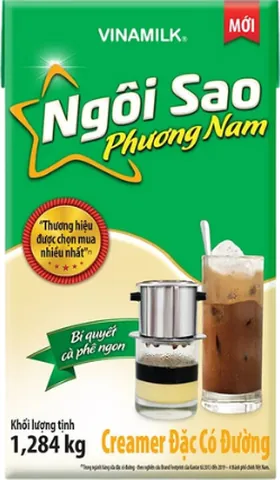 Sữa đặc Ngôi Sao Phương Nam (sweetened condensed creamer)Vinamilk · milk and milk drinks
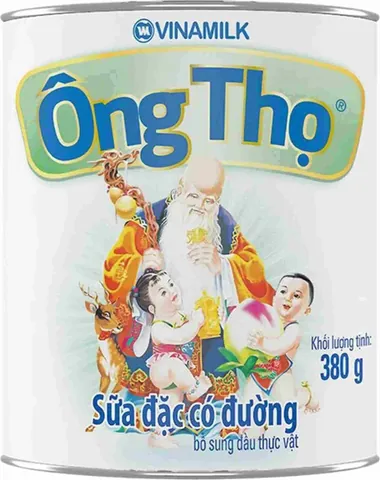 Sữa đặc Ông Thọ (sweetened condensed milk)Vinamilk · milk and milk drinks
Updated 21 October 2026
Photograph the label — Yenzo tells you right away and rates the product.
Thank you! We have received it and will reply by e-mail if needed.