 Yenzo
What is E101 (riboflavin)?
It is riboflavin, also known as vitamin B2, and its salt forms (INS 101(i), 101(ii), 101(iii)). In food it is a colour that gives a yellow shade; riboflavin is also added as a vitamin.
E101 is riboflavin, also known as vitamin B2, and its salt forms. In food it gives a yellow colour; riboflavin is also added as a vitamin.
Did you know? Circular 24/2019/TT-BYT lists riboflavin in three forms: synthetic riboflavin (INS 101(i)), riboflavin 5'-phosphate sodium (101(ii)) and riboflavin from the bacterium Bacillus subtilis (101(iii)).
Wheat flour, vegetable oil, salt, sugar, colour (101), dried onion and garlic, pepper, natural colour (160a).
Sources: Codex CXG 36-1989, Class Names and the International Numbering System (INS)
It is riboflavin, also known as vitamin B2, and its salt forms (INS 101(i), 101(ii), 101(iii)). In food it is a colour that gives a yellow shade; riboflavin is also added as a vitamin.
In 2013 EFSA did not set an ADI for riboflavin (E 101(i)) and riboflavin-5'-phosphate sodium (E 101(ii)) because long-term studies and reproductive and developmental studies were missing. EFSA concluded that, despite uncertainties in the database, the two are unlikely to be of safety concern at the currently authorised uses and use levels as food additives. EFSA also noted that their use as additives gives an exposure above that from the regular diet.
Yes. Riboflavin (INS 101(i), 101(ii), 101(iii)) is listed in Appendix 1 of Circular 24/2019/TT-BYT, the list of additives permitted in food, with the function colour.
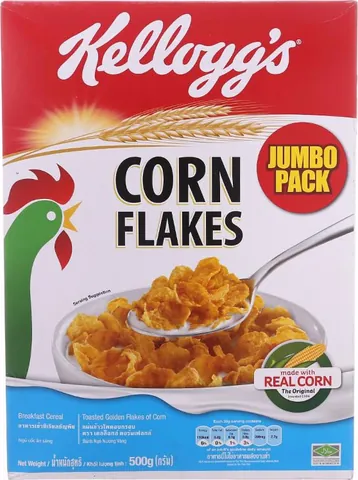 Ngũ cốc Kellogg's Corn FlakesKellogg's · cereals and oats
 Mì Samyang Buldak vị gà cay sốt rosé (rosé hot chicken ramen)Samyang · instant noodles
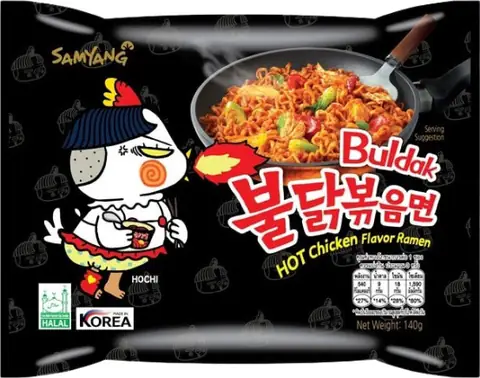 Mì xào Samyang vị gà cay (spicy chicken stir-fried ramen)Samyang · instant noodles
 Mì ramen Vifon vị nước tương (soy sauce ramen)Vifon · instant noodlesMì ramen HO-YA vị gà (golden chicken ramen)HO-YA · instant noodles
Updated 21 October 2026
Photograph the label — Yenzo tells you right away and rates the product.
Thank you! We have received it and will reply by e-mail if needed.