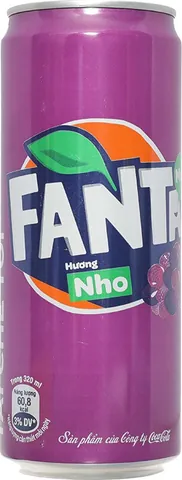
E150 is caramel colour when the label does not print the class; the code means one of the four types E150a, E150b, E150c or E150d. All four are listed in Appendix 1 of Circular 24/2019/TT-BYT.
Did you know? In 1973 Wilks and colleagues confirmed small quantities of 4-methylimidazole (4-MeI) in caramel colour, using chromatographic retention time with infrared and mass spectroscopy.
Caramel colour is a complex mixture made by heating carbohydrates under controlled heat and chemical processing conditions; EFSA divides it into four classes according to the reactants used in manufacture: E150a (class I), E150b (class II), E150c (class III) and E150d (class IV). E150 without a letter is the code used when the label does not print the class, so it is one of these four types.
Is caramel colour harmful?
In 2011 EFSA set a group ADI of 300 mg/kg body weight per day for the caramel colours E150a-d, with 100 mg/kg for class III (E150c) alone. A 2012 follow-up assessment states that combined intake of all four did not exceed the group ADI in any population group, but toddlers and adults could still exceed the 100 mg/kg ADI of E150c.
“However, toddlers and adults have a higher exposure to caramel colour E 150c and could still exceed the ADI of 100 mg/kg bw/day for this caramel colour. The estimated combined exposure to the four caramel colours (E 150a, E 150b, E 150c, E 150d) are considerably lower and the group ADI of 300 mg/kg bw/day is not exceeded for any population group in the current review.”
Yes, by type. The four caramel colours E150a, E150b, E150c and E150d (caramel classes I-IV) are all listed in Appendix 1 of Circular 24/2019/TT-BYT, the list of additives permitted in food, with the function colour. Appendix 1 has no separate row for E150 without a letter.
 Yenzo