 Yenzo
Cakes and biscuits
15 products in the Yenzo catalogue
Updated 30 October 2026
Yenzo has checked 15 products in this group, from Dorkbua, Oreo, Rồng Vàng Hoàng Gia and 9 other brands; on a Vietnamese pack the group is called “bánh ngọt, bánh quy”. The ingredient list and the nutrition table of each product come from its own label — 5 from label photos checked by Yenzo and 10 from the open database Open Food Facts — and every product is rated with the same open formula the Yenzo app uses. Product names are given as printed on the pack, in Vietnamese, with a short English description in brackets.
On the Yenzo scale, 6 are rated “Sometimes” and 9 “Moderate”. Across these 15 products, the thing that most often pulls the rating down is ultra-processing (14 of 15 products), followed by energy density (13) and sugar (12). The ratings compare cakes and biscuits with each other by the same rules — which rank higher within the group — not whether to eat them. Each product's page lists the reasons behind its level, figure by figure, with the threshold each figure is measured against.
All cakes and biscuits
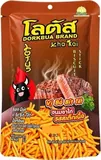 Bánh que Dorkbua vị bò bít tết (beef steak biscuit sticks)Dorkbua · cakes and biscuits
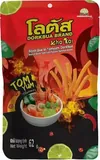 Bánh que Dorkbua vị Tom Yum (biscuit sticks)Dorkbua · cakes and biscuits
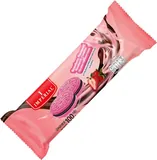 Bánh quy kẹp kem Imperial hương dâu (strawberry sandwich cookies)Imperial · cakes and biscuitsBánh quy Cosy sô cô la chip (chocolate chip cookies)Kinh Đô · cakes and biscuitsBánh Lemon Square Choochoo vị phô mai sữa (cheesy milk cake)Lemon Square · cakes and biscuitsBánh gấu Koala's March Lotte vị sữa chua (yogurt)Lotte · cakes and biscuits
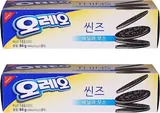 Bánh quy Oreo Thins vị mousse vani (vanilla mousse)Oreo · cakes and biscuits
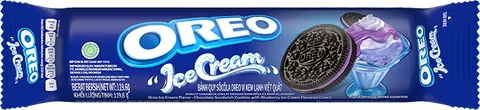 Bánh quy Oreo vị kem việt quất (blueberry ice cream)Oreo · cakes and biscuits
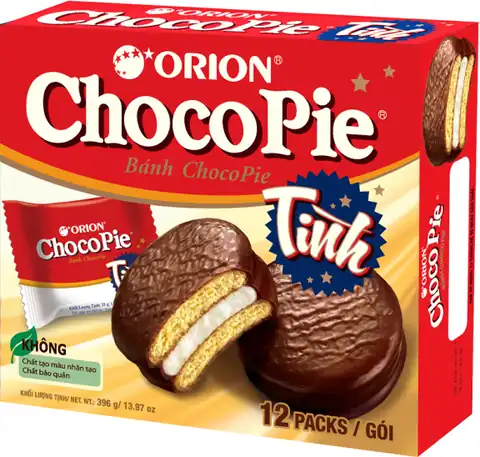 Bánh Choco Pie OrionOrion · cakes and biscuits
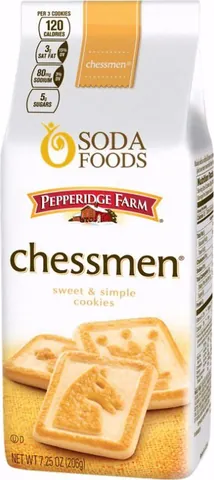 Bánh quy bơ Pepperidge Farm Chessmen (butter cookies)Pepperidge Farm · cakes and biscuits
 Bánh dừa nướng Quý Thu (baked coconut cookies)Quý Thu · cakes and biscuits
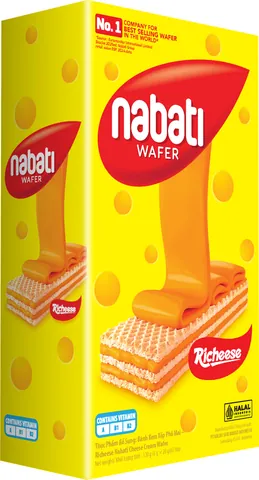 Bánh xốp Richeese Nabati nhân phô mai (cheese cream wafers)Richeese · cakes and biscuits
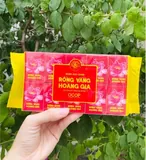 Bánh đậu xanh Rồng Vàng Hoàng Gia (mung bean cake)Rồng Vàng Hoàng Gia · cakes and biscuits
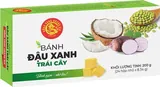 Bánh đậu xanh Rồng Vàng Hoàng Gia hương trái cây (fruit-flavoured mung bean cake)Rồng Vàng Hoàng Gia · cakes and biscuits
Nothing found. Scan the label in the app — Yenzo can rate any product.
Scan the label with the app — Yenzo rates any product in seconds, on the same scale.
Get the appQuestions about cakes and biscuits
Is it bad to eat cakes and biscuits?
Yenzo does not rate a whole type of food as good or bad. Of the 15 products in this group we have rated, 6 are rated “Sometimes” and 9 “Moderate”. The reasons for each product — salt, sugar, fat, additives — are on its own page and in the app.
Cakes and biscuits and preservatives: what do the labels say?
1 of the 15 products in this group we have checked lists a preservative on the label. The most common: sorbic acid (E200). Each product's label has the full list.
Which additives are common in cakes and biscuits?
The most common: sodium carbonates (E500) — 10 products, “very low” risk; ammonium carbonates (E503) — 8 products, “very low” risk; lecithins (E322) — 7 products, “very low” risk (risk levels on the Yenzo Scale).
Other groups
Sources (2)
- Product labels — photographed by Yenzo and its users, checked (5 products)
- Open Food Facts — an open food database (10 products)